
The Guide to Solar Pile Drivers for Utility-Scale Solar Projects
What Is a Solar Pile Driver?
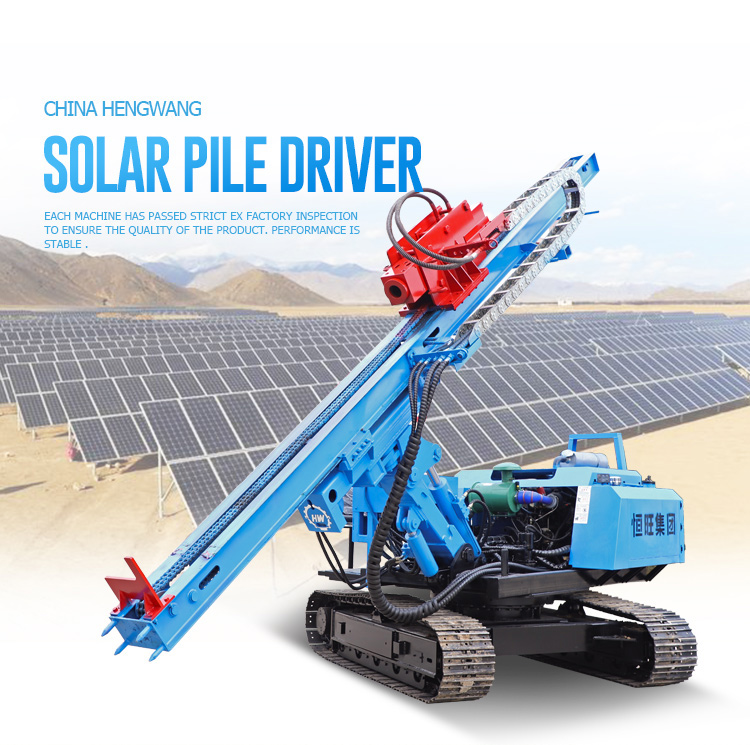
A solar pile driver is a hydraulic construction machine designed to drive steel piles into the ground to support solar mounting systems. It is commonly used in:
Ground-mounted solar farms
Commercial photovoltaic systems
Agricultural solar projects (agrivoltaics)
Solar carports
Fence and infrastructure foundation projects
Unlike general piling equipment, solar pile drivers are optimized for repetitive pile installation with high precision and efficiency. They help contractors complete large numbers of piles in a short time while maintaining consistent alignment and depth.
Why Solar Farms Use Pile Foundations Instead of Concrete
In many solar projects, steel piles are preferred over concrete foundations. The reason is simple: piles reduce construction time and simplify installation.
Advantages of pile foundations:
Faster installation
Piles can be driven directly into the ground without waiting for concrete to cure.
Lower labor costs:Smaller crews can complete foundation work more efficiently.
Less excavation:Minimal soil disturbance reduces site preparation work.
Better environmental performance:Pile foundations use less concrete and generate less construction waste.
Easy removal or adjustment:In some projects, piles can be removed or modified more easily than concrete bases.
These advantages make solar pile drivers an essential tool for modern photovoltaic construction.
How a Solar Pile Driver Works
The installation process is straightforward but requires precision.
Step 1: Site Survey
Before installation, crews evaluate:
Soil conditions
Ground slope
Pile specifications
Project layout
This helps determine the appropriate machine and pile type.
Step 2: Machine Positioning
The solar pile driver moves to the designated pile location. Crawler-mounted machines provide better stability on uneven terrain.
Step 3: Mast Alignment
The operator adjusts the mast to ensure the pile is vertical or set to the required angle for the mounting system.
Step 4: Pile Driving
The hydraulic hammer drives the pile into the ground primarily through gravity drop, which minimizes reaction force and ensures higher precision. The operator monitors penetration depth via mast markings.
Depth and alignment are typically monitored by the operator and mechanical controls. For automated monitoring, an optional positioning system (such as the Sinognss system) is available.
Step 5: Inspection
After installation, crews verify:
Pile depth
Verticality
Structural integrity
Once approved, the mounting structure can be installed.
Types of Solar Pile Drivers
Solar pile drivers come in several configurations depending on project requirements.
Crawler Solar Pile Drivers
Crawler-mounted machines offer superior mobility and stability.
Advantages:
Better traction on rough terrain
Stable operation on slopes
Improved safety in outdoor environments
Best for:
Hilly or uneven sites
Agricultural land
Remote solar projects
Multi-Function Solar Pile Drivers
Multi-function models combine several capabilities in one machine.
Typical functions include:
Pile driving
DTH drilling
Auger drilling
Screw pile installation
These machines are ideal for contractors who handle different foundation tasks and want higher equipment utilization.
Choosing the Right Machine for Different Soil Conditions
Soil conditions have a major impact on machine selection and productivity.
| Type | Core Advantage | Reference Weight | Reference Engine |
| HW510R-BS | 5-meter pile driving height self-weight pile driving | 5000kg | Cummins 75kW |
| HWL300R | 360° rotation, 3-meter slide track, 100# hammer head | 6180kg | Yuchai 85kW |
| HWL390H | Side sliding/snow mountain type, 45° working slope, 280mm snow mountain track | 7740kg | Yuchai 85k |
| HWR300 | 90° side swing, in a space-constrained scenario | 5800kg | Yuchai 85kW |
| HWR300 | Basic Standard Configuration Type | 4865kg | Yuchai 85kW |
Solar Pile Driver Cost Guide
The cost of a solar pile driver depends on size, hydraulic system quality, engine power, and additional functions.
Additional factors affecting price include:
Engine brand and emissions standard
Hydraulic component quality
Multi-function capability
Transportation and delivery costs
Maintenance Tips for Long Service Life
Proper maintenance helps prevent downtime and extends machine life.
Daily Checks
Hydraulic oil level
Fuel level
Hoses and fittings
Hammer condition
Weekly Maintenance
Check hydraulic pressure
Inspect fasteners
Examine crawler tracks and rollers
Monthly Maintenance
Engine service
Hydraulic filter replacement
Structural inspection of mast and chassis
Consistent preventive maintenance is especially important during long solar construction projects.
Other reminders:
Break-in period maintenance: For the first 50 hours of operation, the hydraulic oil and return oil filter must be replaced.
Check the fuel, hydraulic oil, coolant, pipelines, fasteners and the overall appearance of the machine.
Second-level maintenance: Includes the part that requires greasing (such as pin shafts, slides, etc.)
Air filter: Check daily, replace every 500 hours.
Common Challenges During Solar Pile Installation
Hard Rock Layers
Piles may refuse to penetrate hard rock. Drilling capability becomes essential in these conditions.
Uneven Terrain
Slopes and rough ground can affect machine stability and pile alignment. Crawler machines with adjustable masts are preferred.
Groundwater
High groundwater levels may reduce soil bearing capacity and require deeper piles.
Extreme Weather
Heavy rain, wind, or extreme heat can slow installation and affect safety.
Pile Misalignment
Improper alignment can create problems for the entire mounting structure. Accurate positioning systems and experienced operators are critical.
Solar Pile Drivers for Rocky Ground
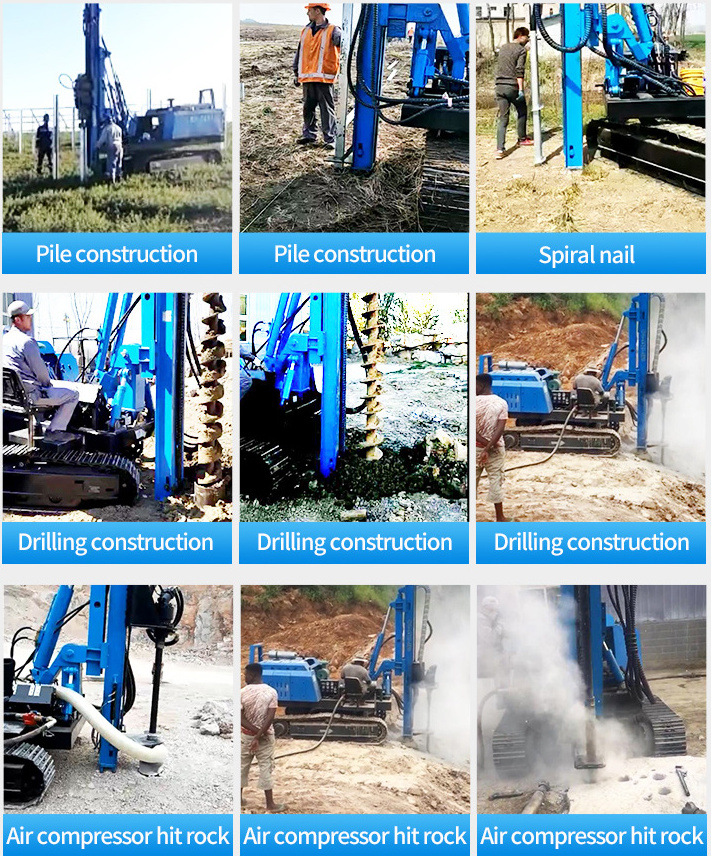
Rocky terrain is one of the most challenging environments for solar construction. Standard pile drivers may struggle with:
Low penetration speed
Frequent pile refusal
Excessive hammer wear
Increased project delays
A multi-function machine like the Hengwang HWL390H is designed to handle these conditions by combining drilling and pile-driving functions.
Typical workflow in rocky ground:
Direct impact: Use a hydraulic hammer (1500J) to directly strike the steel pipe or H-shaped pile.
Drill first, then drive: For rock layers that are difficult to penetrate, start by using a percussion drilling rig (DTH) to drill holes, then insert the pile into the completed holes, and finally secure it.
This integrated approach reduces the need for multiple machines on site and improves efficiency in difficult terrain.
Frequently Asked Questions
What is the difference between a solar pile driver and a standard pile driver?
A solar pile driver is optimized for repetitive photovoltaic foundation work, with features such as precise mast alignment, crawler mobility, and faster cycle times for solar farm construction. And The core advantages of the solar pile driver include "multi-purpose in one machine" and "multi-dimensional adjustment for stability".
Can solar pile drivers work on slopes?
Yes. Crawler-mounted models and machines with adjustable masts can operate on uneven terrain. The HWL390H can work on slopes up to 45°.
Do I need a multi-function machine?
A multi-function machine is valuable if your projects involve rocky ground, drilling work, screw piles, or multiple types of foundation installation.
Final Thoughts
Solar pile drivers have become a key tool in modern photovoltaic construction. They improve installation speed, reduce labor costs, and provide the accuracy needed for reliable solar foundations.
When choosing a machine, focus on:
Soil conditions
Pile length requirements
Terrain characteristics
Project scale
Future equipment utilization
Hengwang’s product line covers a wide range of needs:
| Operating Condition Characteristics | Recommended Model | Core Advantages |
| Plains/Dunes/Large Areas, High Efficiency, High Precision Requirements | HW510R-BS | High self-weight piling accuracy, precise adjustment of slide track dimensions, Cummins engine stable and reliable |
| Narrow sites, need flexible steering, frequent changes of construction points | HWL300R | 360° rotating chassis, flexible and maneuverable, strong impact force |
| Mountains, Hills, Steep Slopes (up to 45°) | HWL390H | Mountain-type tracks, 45° working slope, lateral sliding suitable for rough terrain |
| Limited space, can only perform side construction | HWR300A | Slide track can be 90° side swayed, solves the problem of construction in narrow sites |
Conventional foundation construction, | HWR300 | Structurally simple, economical and practical, meets basic piling requirements |
By matching the machine to the project environment, contractors can improve efficiency, reduce downtime, and build solar farms more effectively.
For detailed specifications or project-specific recommendations, Hengwang can provide customized solar pile driving solutions based on your site conditions and installation requirements.